
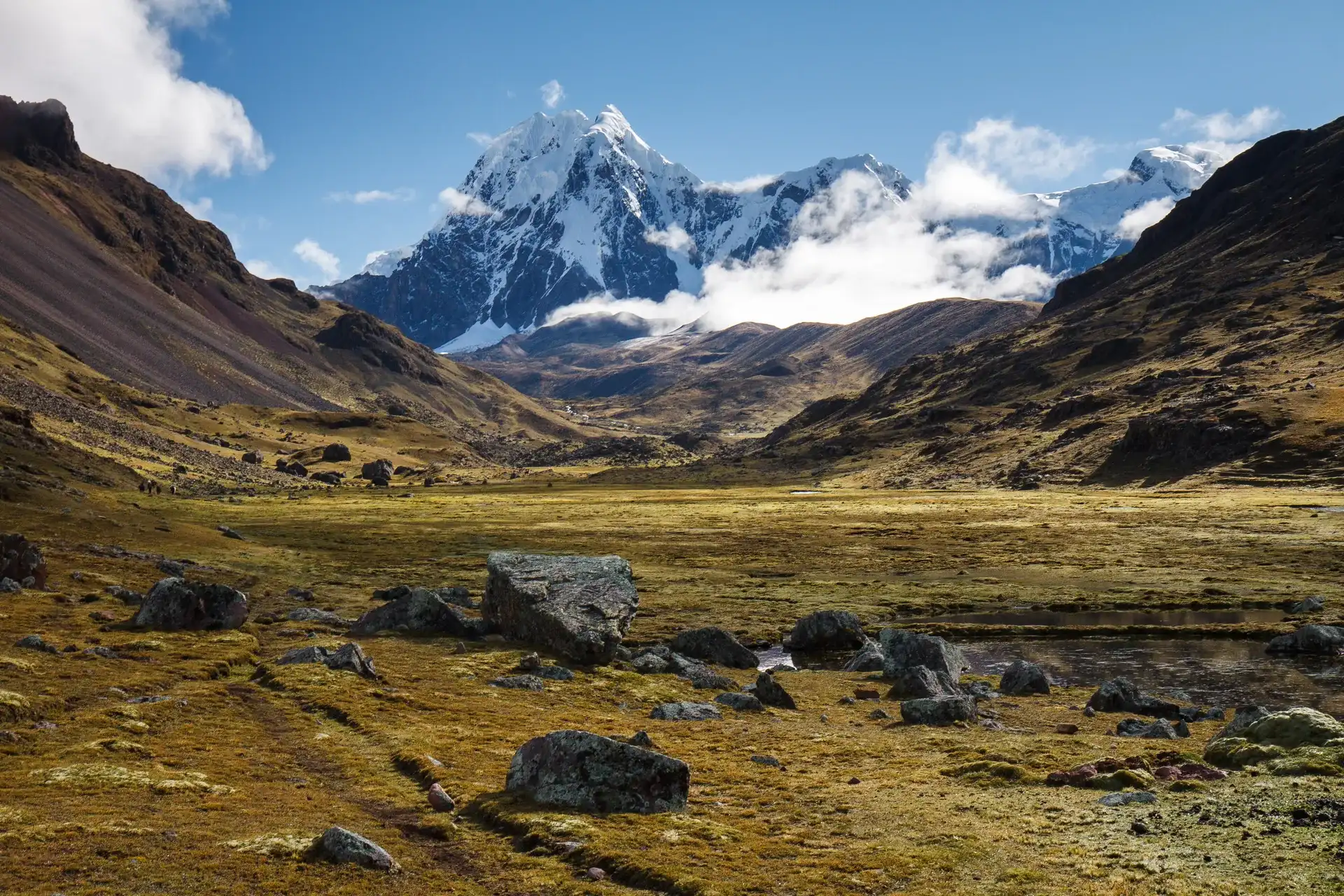
Salkantay and Ausangate are the two most famous snow peaks in the Cusco region and the two big multi-day treks that do not need an Inca Trail permit. They share the essentials —glaciers, lakes, high passes and cold nights— but they are very different experiences: one ends at Machu Picchu and drops into the cloud forest; the other circles a sacred mountain without ever really leaving the high puna. This comparison helps you choose based on your fitness, your acclimatisation and the trip you want.
Start here: Cusco tips · things to do in Cusco
The short answer
- Choose Salkantay if it is your first high-altitude trek, you want to finish at Machu Picchu and you love the idea of going from mountains to jungle.
- Choose Ausangate if you already have altitude experience, want a more remote, less crowded route and are drawn to the life of Andean herders.
- If in doubt, Salkantay is the more accessible option; Ausangate is the tougher one.
- Salkantay Trek to Machu Picchu: route, difficulty, best season and how to plan it
- Ausangate trek: the great circuit of the sacred peak (route, altitude and preparation)
Popular activities on GetYourGuide
Quick comparison
- Mountain: Salkantay is about 6,270 m; Ausangate tops 6,300 m and is the highest mountain in the Cusco region.
- Typical length: Salkantay, 4–5 days and around 70 km; Ausangate, a 4–6 day circuit.
- Highest point: on Salkantay, the pass at around 4,600 m; on Ausangate, the Palomani pass above 5,000 m, plus several other passes over that height.
- Where you sleep: on Salkantay the first night is at about 3,900 m and then you descend; on Ausangate camps are usually between 4,300 and 4,700 m every night.
- Finish: Salkantay ends in Aguas Calientes and Machu Picchu; Ausangate loops back to the Tinki or Upis area, about 3–4 hours by road from Cusco.
- Permit: neither requires the Inca Trail permit, although communities may charge access fees.
Difficulty and altitude
Neither is technical, but both are demanding. The big difference is how long you stay high.
Salkantay has one very hard day, the second, with the climb to the pass and a long 7–9 hour descent; after that the trail drops towards the cloud forest and altitude stops being the main issue. On Ausangate, by contrast, you walk and sleep above 4,000 m for the whole circuit and cross several passes over 5,000 m. Fatigue builds up and the night-time cold is far harsher.
For Salkantay, acclimatise at least 2–3 days in Cusco; for Ausangate, at least 3–4 days at altitude, ideally with a day hike such as Humantay or Rainbow Mountain before you start.
Altitude sickness
On both treks, if you notice severe symptoms (an intense headache that will not ease, vomiting, confusion or breathlessness at rest), tell your guide and descend. Do not push on to a high pass with symptoms.
- Altitude sickness in Cusco: how to prevent it and what to do
- Humantay Lake: how to get there, the hike and tips
Scenery and experience
- Salkantay: a glacier right beside you at the pass, Humantay Lake on day one, then a spectacular descent into coffee farms, fruit trees and cloud forest. It is a journey through several ecological zones in a few days, with Machu Picchu as the final reward.
- Ausangate: coloured lakes, glaciers, mineral-striped mountains, herds of alpacas and llamas and herding communities. Many itineraries include Rainbow Mountain via a quieter approach than the day trips. It is almost continuous high-mountain scenery, and far more isolated.
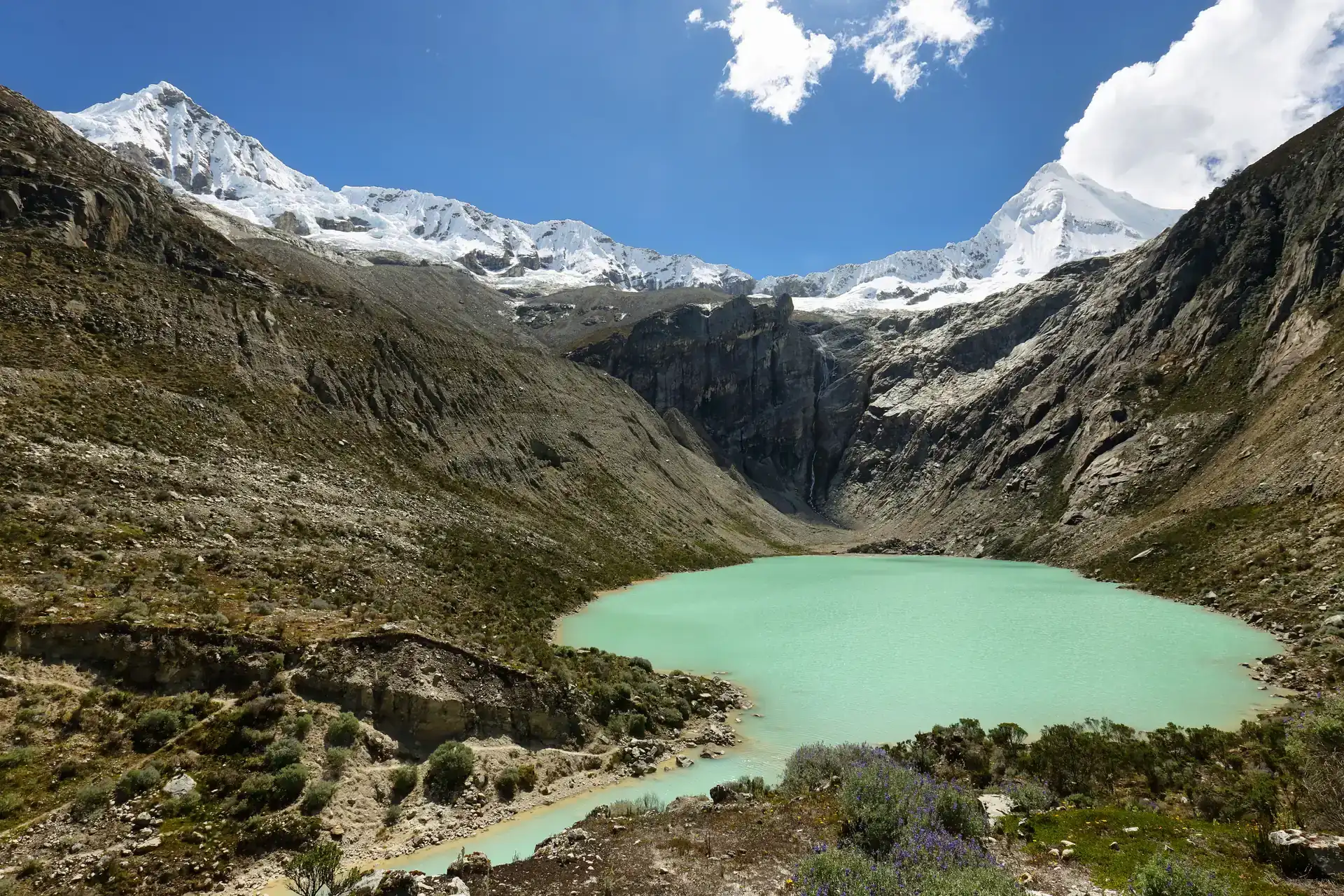
- Rainbow Mountain (Vinicunca): a practical guide to visiting
- Ausangate Seven Lakes: a one-day hike from Cusco
People, services and atmosphere
Salkantay is now Cusco's most popular alternative trek: in high season you will meet plenty of groups, organised campsites and, on several versions, more comfortable lodges. Ausangate is lonelier, with fewer groups, few services and no phone signal on many stretches. For some people that is exactly the point; for others it is an extra challenge.
Ausangate is also a sacred apu for Quechua communities, and the Qoyllur Rit'i pilgrimage takes place on its slopes every year. Walk respectfully: ask before taking photos and leave no rubbish.
What about Machu Picchu?
If Machu Picchu is a must and you are short on days, Salkantay kills two birds with one stone: you visit the citadel on the last day. Make sure your agency books the ticket with a date and circuit, as it is not included automatically. With Ausangate you need to plan Machu Picchu separately, before or after the trek, and add at least two more days to your trip.
- Machu Picchu tickets: how to buy them on the official site and not miss out
- Sacred Valley and Machu Picchu in 2 days: the connecting tour explained
Best season for each
The dry season, May to September, is best for both, with clearer skies; it is also the busiest and has the coldest nights, which you feel much more on Ausangate. April and October are good compromises. From December to March it rains often: Salkantay gets muddy with landslide risk on some stretches, while Ausangate sees frequent rain, snow and fog, and many agencies do not run it.
- Best time to visit Cusco and what to pack
- Cusco weather by month: temperatures, rain and what to expect
Logistics and insurance
Both are mostly done with an agency that arranges transport, guide, cook, muleteers and pack animals, tents and food. Going independently is only sensible with solid mountain and navigation experience, and on Ausangate you should at least hire a local muleteer. Carry cash for community fees and rent any missing gear in Cusco, especially a good sleeping bag.
Travel insurance
Check that your policy covers high-altitude trekking and evacuation; for Ausangate, above 5,000 m.
- How to choose a tour agency in Cusco: a checklist to get it right
- Trekking gear rental and shops in Cusco: what to rent, what to bring and tips
Frequently asked questions
- Which is harder, Ausangate or Salkantay?
- Ausangate, because you spend the whole circuit above 4,000 m and cross several passes over 5,000 m; on Salkantay the high point is about 4,600 m and then you descend.
- Which one ends at Machu Picchu?
- Salkantay. Ausangate returns to the Tinki or Upis area, so Machu Picchu has to be planned separately.
- Do I need a permit for either?
- Neither needs the Inca Trail permit, but communities may charge fees and the Machu Picchu ticket is booked separately.
- Which is better for a first high-altitude trek?
- Salkantay is usually the more accessible choice, as long as you acclimatise properly in Cusco first.
Book this plan
- Inca Trail to Machu PicchuCompareSee dates →
- Salkantay trekCompareSee dates →
- Inca Jungle trek to Machu PicchuCompareSee dates →
Notice: This guide shares advice and recommendations based on research and local experience. Prices, opening hours and rules may change: always check with official sources and operators. Cusco Tips is not responsible for third-party services, bookings or decisions made using these guides; some links are affiliate links (see our affiliate policy).
Related guides
Salkantay Trek to Machu Picchu: route, difficulty, best season and how to plan it
Salkantay Trek guide: 4–5 day route over a pass of about 4,600 m, Humantay Lake, cloud forest, arrival in Aguas Calientes, difficulty, best season and agency vs independent.
Read guide →
Ausangate trek: the great circuit of the sacred peak (route, altitude and preparation)
Ausangate trek guide: a 4–6 day circuit above 4,000 m with passes over 5,000 m, lakes, glaciers and Rainbow Mountain, best season, cold, agencies and safety.
Read guide →
Which trek to Machu Picchu? Inca Trail vs Salkantay vs Inca Jungle vs Lares
Machu Picchu treks compared: classic and short Inca Trail, Salkantay, Inca Jungle and Lares. Days, distance, altitude, permits, difficulty and which to choose for your trip.
Read guide →
Ausangate Seven Lakes: a one-day hike from Cusco
Ausangate Seven Lakes guide: the loop from Pacchanta, altitude and difficulty, hot springs, getting there from Cusco, best season, what to pack and comparison with Humantay.
Read guide →
Altitude sickness in Cusco: how to prevent it and what to do
Cusco sits at about 3,400 m. Altitude sickness symptoms, warning signs, how to acclimatize, coca tea, medication and when to do the highest day trips.
Read guide →