
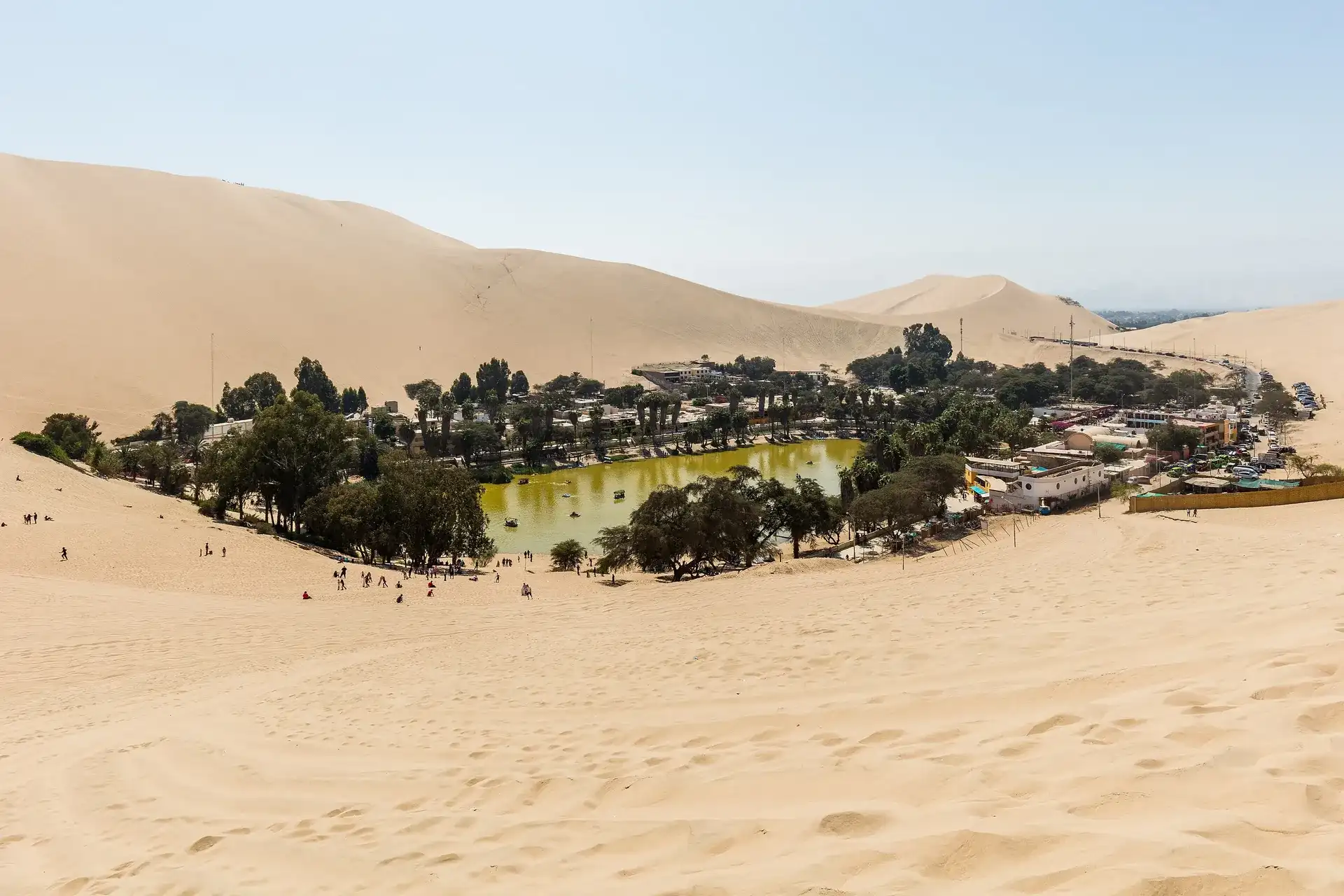
Many travellers reach Cusco and, once in the Andes, wonder whether it is worth heading down to the coast to see the Nazca Lines and the Huacachina oasis. The answer is usually yes, but you need to understand the distance: there are no commercial flights between Cusco and Nazca, and overland it is around 15 hours of mountain road. This guide explains the two realistic ways to do it, how the Nazca Lines flights work, what to expect in Huacachina and a 3–4 day route that fits the rest of your southern Peru trip.
Start here: Cusco tips · things to do in Cusco
Quick summary
- Distance: Nazca is on Peru's southern coast, in the Ica region; from Cusco you drop from about 3,400 m to the desert.
- Option 1: direct Cusco–Nazca bus, about 14–15 hours, usually overnight.
- Option 2: fly Cusco–Lima, then bus south along the Panamericana (Ica, Huacachina and Nazca).
- Sensible minimum: 3 days for Nazca + Huacachina without rushing; 4 if you add Paracas.
Popular activities on GetYourGuide
Option 1: direct bus Cusco–Nazca
The direct route runs via Abancay, Chalhuanca and Puquio down to Nazca. According to 2026 timetables listed on bus comparison sites, departures from Cusco's Terminal Terrestre are in the afternoon and the trip takes about 14–15 hours, reaching Nazca in the early hours or early morning. Good to know:
- It is a winding mountain road that crosses high puna before dropping to the desert. If you get travel sick, eat light and bring your usual medication.
- It is cold at night in the highlands and warm on arrival at the coast: dress in layers.
- Choose full-recline (cama) seats with established companies and keep valuables with you.
- Arriving in Nazca very early is normal; book a place that allows early check-in or luggage storage.
Save a night
The overnight bus saves a hotel night, but you will arrive tired. If you plan to fly over the lines that day, try to sleep on the bus and eat a light breakfast.
Option 2: via Lima
If you prefer fewer hours on a bus, fly from Cusco to Lima (just over an hour) and head down the coast. Lima to Ica is about 4–5 hours on the Panamericana Sur, Huacachina is a few minutes from Ica, and Ica to Nazca takes another 2–3 hours. That way you travel the coast north to south and can stop in Paracas on the way. It works well if your international flight leaves from Lima at the end of the trip.
- Cusco to Lima (and Lima to Cusco): flight or bus, travel times and tips
- Cusco airport to the city centre: taxi, ride apps, transfers and approximate prices
The Nazca Lines: what they are
The Lines and Geoglyphs of Nasca and Palpa have been a UNESCO World Heritage Site since 1994. They are figures and lines drawn on the desert plains; PromPerú attributes them mainly to the Nasca culture, which dominated the area between AD 200 and 700, and notes that nearly 800 designs can be seen today, about 70 of them animals. German archaeologist Maria Reiche devoted her life to studying and protecting them, and Nazca's airfield is named after her.
How the flights work
There are two ways to see the lines: from a metal viewing tower beside the Panamericana, which shows only a few figures, or from the air, which is the full experience. According to PromPerú:
- The classic flight lasts about 30 minutes and passes over around 13 of the best-known figures.
- Longer flights also include the Palpa geoglyphs.
- Take-off times are assigned by the control tower and depend on traffic and weather; fog causes delays or rescheduling.
- Foreigners must show their original passport (Peruvians their DNI). Without it you cannot fly.
- July and August are high season: book ahead and expect morning fog delays.
Motion sickness
The small planes bank left and right so everyone sees the figures. If you get queasy, fly on a near-empty stomach, look at the horizon between figures and ask a pharmacy for travel-sickness tablets.
Huacachina: the oasis among dunes
Huacachina is a lagoon ringed by palm trees and giant dunes, about 5 km from the city of Ica according to PromPerú. It is a Regional Conservation Area and every visitor pays an individual entry ticket; the regional ordinance published in El Peruano sets it at S/ 8.10 for foreigners (check the current fee). The highlights are sandboarding and dune-buggy rides, best in the late afternoon for the sunset.
- Use registered operators and check the buggy has seat belts and a roll bar.
- Ask the driver to slow down if you are uncomfortable: that is your right.
- Bring sunglasses, sunscreen, water and clothes you do not mind filling with sand.
Suggested 3–4 day route
- Day 1: overnight bus from Cusco to Nazca (afternoon departure).
- Day 2: early arrival, morning flight over the lines and an afternoon bus to Ica (2–3 hours); night in Huacachina.
- Day 3: free morning at the oasis, buggies and sandboarding at sunset.
- Day 4 (optional): Paracas and the Paracas Reserve, then on to Lima.
If you are continuing to Arequipa, reverse the order: Huacachina first and Nazca last, since buses run from Nazca to Arequipa.
- Cusco to Arequipa: overnight bus, flights, via Puno or by luxury train
- Cusco to Puno and Lake Titicaca: bus, tourist bus, train or plane
Altitude and climate: a big change
Going from the Andes to the coast is a relief for your body: Nazca and Ica are far below Cusco's altitude and altitude sickness disappears. But the climate changes completely: strong sun and heat in the desert by day, cool nights and very dry air. Drink plenty and wear sunscreen.
Heading back up
If you return to Cusco or go to Puno afterwards, your body will need to acclimatise again. Plan an easy first day.
Practical tips
- Buy bus tickets with your name and ID; in high season, a couple of days ahead.
- Carry cash in soles for the Huacachina ticket and tips.
- In Nazca, agencies sell flights on the street; compare and pick registered companies.
- Travel insurance that covers adventure activities is a good idea if you will sandboard.
Before you go

eSIM for Peru
Land connected: install an Airalo data eSIM before you travel and switch it on when you land. Check first that your phone supports eSIM and is unlocked.
Get online in Peru →Frequently asked questions
- Are there flights from Cusco to Nazca?
- There are no direct commercial flights. Nazca's airfield is used for sightseeing flights; you arrive by direct bus from Cusco or by flying to Lima and travelling down the coast.
- How long is the bus from Cusco to Nazca?
- About 14–15 hours on a direct bus, usually overnight.
- Do I need my passport for the Nazca flight?
- Yes, foreigners must show their original passport.
- How much is entry to Huacachina?
- There is an individual Regional Conservation Area ticket; according to the ordinance published in El Peruano, S/ 8.10 for foreigners. Check the current fee.
Official sources
Book this plan
- Cusco city tourCompareSee dates →
- Sacred Valley tourCompareSee dates →
- Machu Picchu day trip from CuscoCompareSee dates →
Notice: This guide shares advice and recommendations based on research and local experience. Prices, opening hours and rules may change: always check with official sources and operators. Cusco Tips is not responsible for third-party services, bookings or decisions made using these guides; some links are affiliate links (see our affiliate policy).
Related guides

Cusco to Lima (and Lima to Cusco): flight or bus, travel times and tips
How to travel between Cusco and Lima: 1–1.5-hour direct flights or a roughly 20–22-hour bus, routes, approximate prices, stops in Nazca and Ica, altitude tips.
Read guide →
Cusco to Arequipa: overnight bus, flights, via Puno or by luxury train
How to get from Cusco to Arequipa: overnight bus (duration, classes, safety), direct or connecting flights, the route via Puno and Titicaca, the luxury train and altitude tips.
Read guide →
Cusco to Puno and Lake Titicaca: bus, tourist bus, train or plane
How to get from Cusco to Puno: direct bus (about 6–7 h), tourist bus with stops at Raqchi and La Raya, scenic train or flight to Juliaca. Altitude, tips and what to see on Titicaca.
Read guide →
Cusco airport to the city centre: taxi, ride apps, transfers and approximate prices
How to get from Alejandro Velasco Astete airport to central Cusco or straight to the Sacred Valley: options, times, approximate prices and safety tips.
Read guide →
Altitude sickness in Cusco: how to prevent it and what to do
Cusco sits at about 3,400 m. Altitude sickness symptoms, warning signs, how to acclimatize, coca tea, medication and when to do the highest day trips.
Read guide →